Our History
Over 100 Years of Church of the Good Shepherd
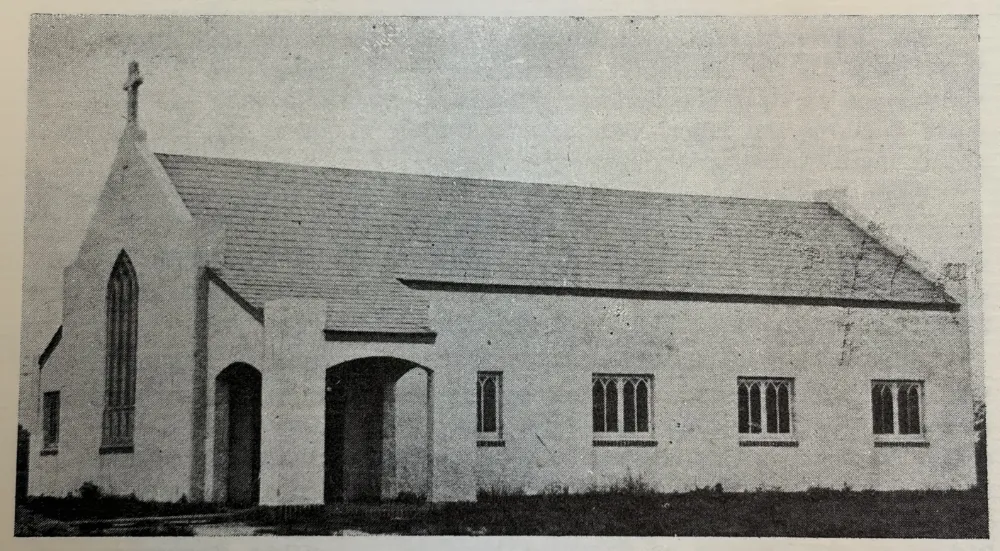
Good Shepherd’s origins actually trace back to Sunday school. The surrounding neighborhoods that are now filled with homes was rural suburbia in 1915. A scattering of families lived in close-knit community, ten miles from churches in downtown Norfolk—too far to travel back and forth for separate Sunday school and church services. (Traditional Episcopal services for adults were held at 8:00 am and 10:00 am with Sunday School for children in between.) So, a Women’s Guild raised more than $3,000, and plans were drawn up for a “distinctive little church in Spanish Mission style,” whose stucco exterior and brick flooring are echoed in today’s building.
Construction began in spring 1917 as the U.S. entered World War I. It was completed quickly and the Church of the Good Shepherd held its dedication service on September 30 of the same year. A congregation of some 30 people was served by a temporary minister until the end of the war, when its first rector arrived. The congregation grew to 86 in 1921 and 200 by 1928. Such numbers demanded expansion, so a new chancel, a frame building for Sunday school and a side wing for 100 additional seats were added.
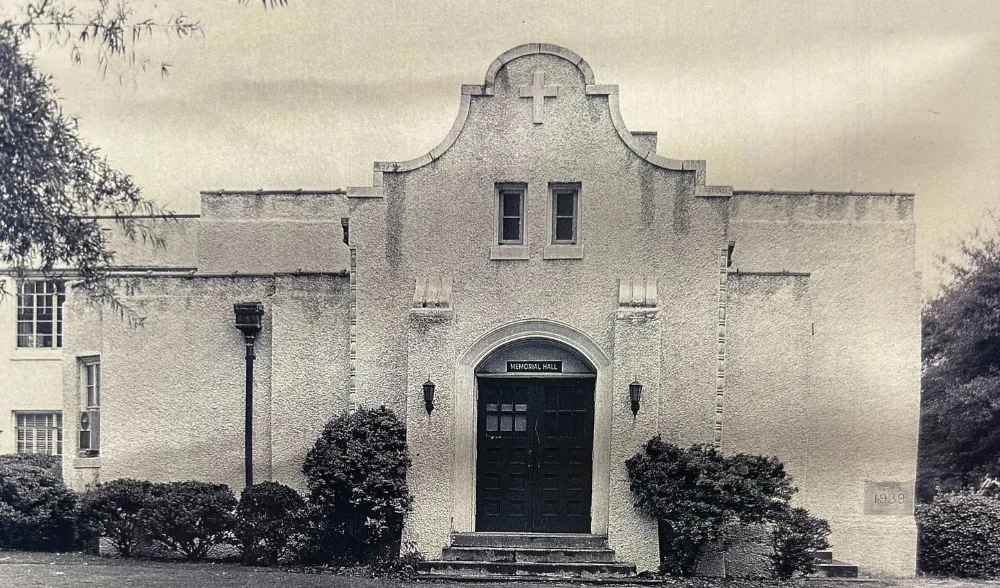
The congregation continued to swell as Good Shepherd became a center of community life in the surrounding neighborhoods. By 1938, Sunday school alone was drawing more than 250 children with a staff of 41. Parish families overflowed facilities at every event. It was time for a new building. A separate parish hall comprising Memorial Hall, kitchen, and office space would make room for Good Shepherd’s burgeoning congregation.
In February 1939, the cornerstone was laid, and in September, Memorial Hall began welcoming card parties, Church Service League meetings, plays, movies, dinners, receptions, and Sunday School classes with “rolling walls” separating girls from boys. With the onset of World War II, Good Shepherd turned its hand from parties and suppers to war-related activities: First Aid and Home Nursing classes, sewing projects for the Red Cross, and an Armed Forces Hospitality Center.

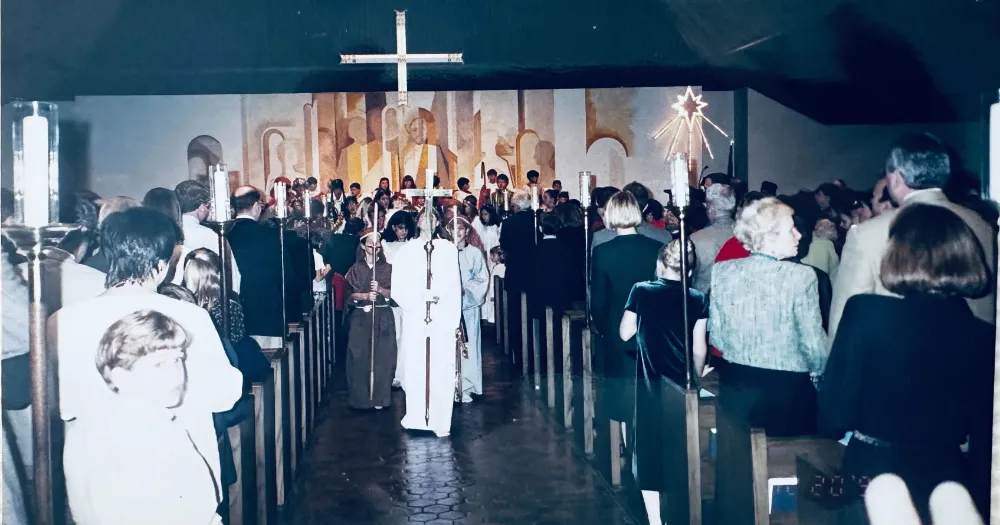
At the end of the war, the population of Good Shepherd skyrocketed with returning servicemen and their young families. A new service was inaugurated to allow parents and children to attend church together, much like today’s service, which led to the church “literally living up to its name, shepherding into Sunday school most of the children in the area, regardless of the parents’ church affiliation.” With 300 children overwhelming the facilities, a campaign began to build a new section connecting Memorial Hall and the original church, which would be devoted to Sunday School classes. The campaign surpassed its goal, and the new 13-classroom addition was completed in 1956.
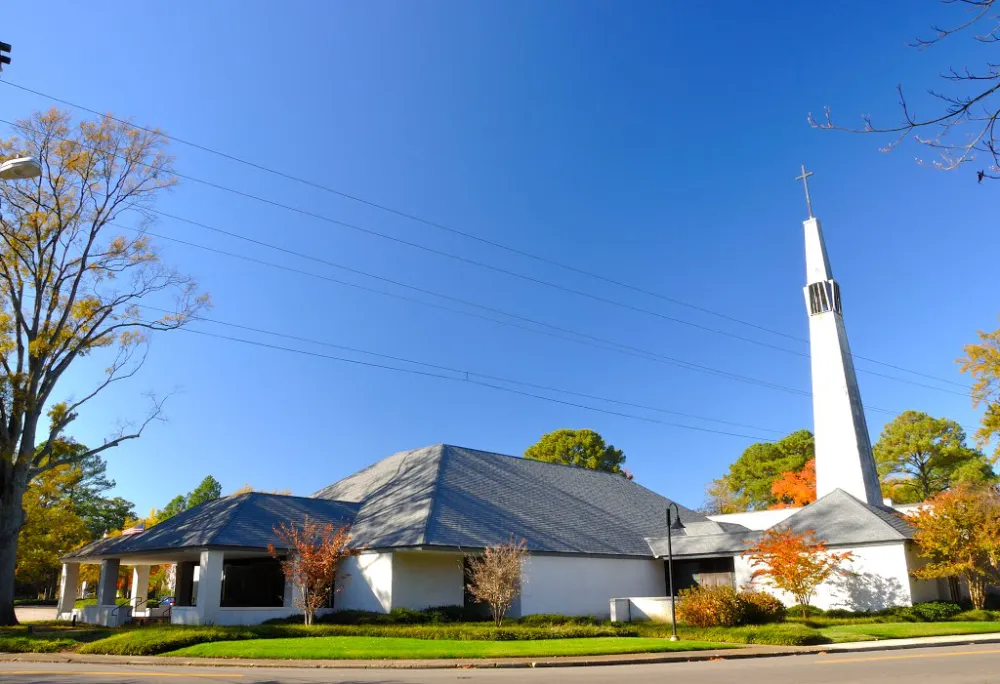
The parish’s explosive growth from 33 congregants in 1917 to some 1,700 in 1965 was bursting the seams of both the church and Sunday School addition. A Planning and Building Committee was set up to undertake the expansion, which would include a new, larger church as well as parking space. Four adjacent houses were purchased and demolished to make room. Subcommittees studied the needs of Sunday School and youth programs, administrative space, and musical and liturgical activities. Almost 50 years to the day after the dedication of the little stucco church, ground was broken and a new contemporary church opened on June 2, 1969.
The subsequent years have seen waves of change sweep through Good Shepherd in rhythm with social changes around us. In the 1970s, Good Shepherd was the largest church in the Episcopal Diocese of Southern Virginia. While Good Shepherd’s size has decreased since its peak, the congregation remains a vibrant (and now growing) community. At the same time, modernization has opened access to cooperative projects with more churches and organizations in service to our neighbors in need of food or encouragement or Christmas carols.
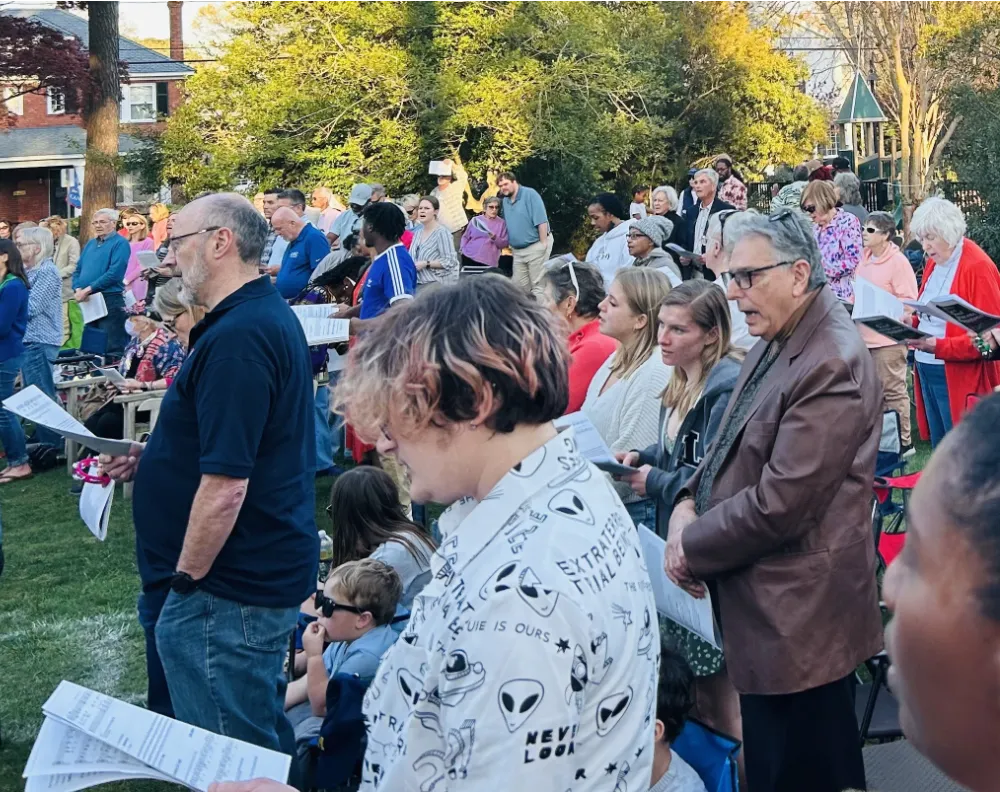
Good Shepherd has adapted to keep its greater community involvement active. Red Cross links have moved on from sewing projects for WWII to blood drives. Loch-Meadow Kindergarten, which had been housed in one of the buildings sacrificed to Good Shepherd’s expansion, moved into the new church addition. More non-profits, from Lee’s Friends to High Tide AA, have found office space at Good Shepherd and innumerable local social or performing groups meet in Memorial Hall. The Young Adult Ministry of the 1970s has grown into today’s Young Families. Outreach missions have contributed to peoples in Bolivia, Burkina-Faso, Malawi, and Belize, as well as local groups in need. The great shutdown of COVID threw open the virtual portals of Facebook, Instagram, YouTube, e-news, QR codes, e-vites, signup lists—all allowing Good Shepherd to continue uniting its community in and beyond the parish. Today, over a century after its founding, the Church of the Good Shepherd continues its original mission of being a neighborhood church and spiritual anchor in Meadowbrook and the surrounding area, and the congregation flourishes as a community that seeks to be creative, curious, and faithful both in Norfolk and the wider world.